Cracking Freeroll Schedules: Hidden Patterns in Poker Tournaments That Deliver Real Edges
Cracking Freeroll Schedules: Hidden Patterns in Poker Tournaments That Deliver Real Edges

Freerolls Basics: Free Entries Leading to Real Prizes
Freerolls draw thousands of players daily because they offer genuine cash rewards without buy-ins; operators host these tournaments across major platforms, turning no-risk entries into bankroll builders for sharp observers who spot schedule rhythms. Data from industry trackers reveals over 500 freerolls running weekly worldwide, with prize pools totaling millions annually, yet patterns in timing and frequency separate casual entrants from those gaining consistent edges. Players who log schedules notice freerolls cluster during off-peak hours like early mornings or late nights UTC, where fields fill slower but competition thins out because recreational players stick to evenings.
And here's where it gets interesting: platforms adjust freeroll cadences based on traffic data, ramping up volume when overall player pools dip, which creates exploitable windows for multi-tabling without fierce overlaps. Take one aggregator site that compiles schedules; it shows average daily freerolls jumping 25% on Tuesdays compared to Fridays, a quirk tied to midweek retention strategies rather than weekend hype.
Daily Rhythms: Timing the Entry Windows
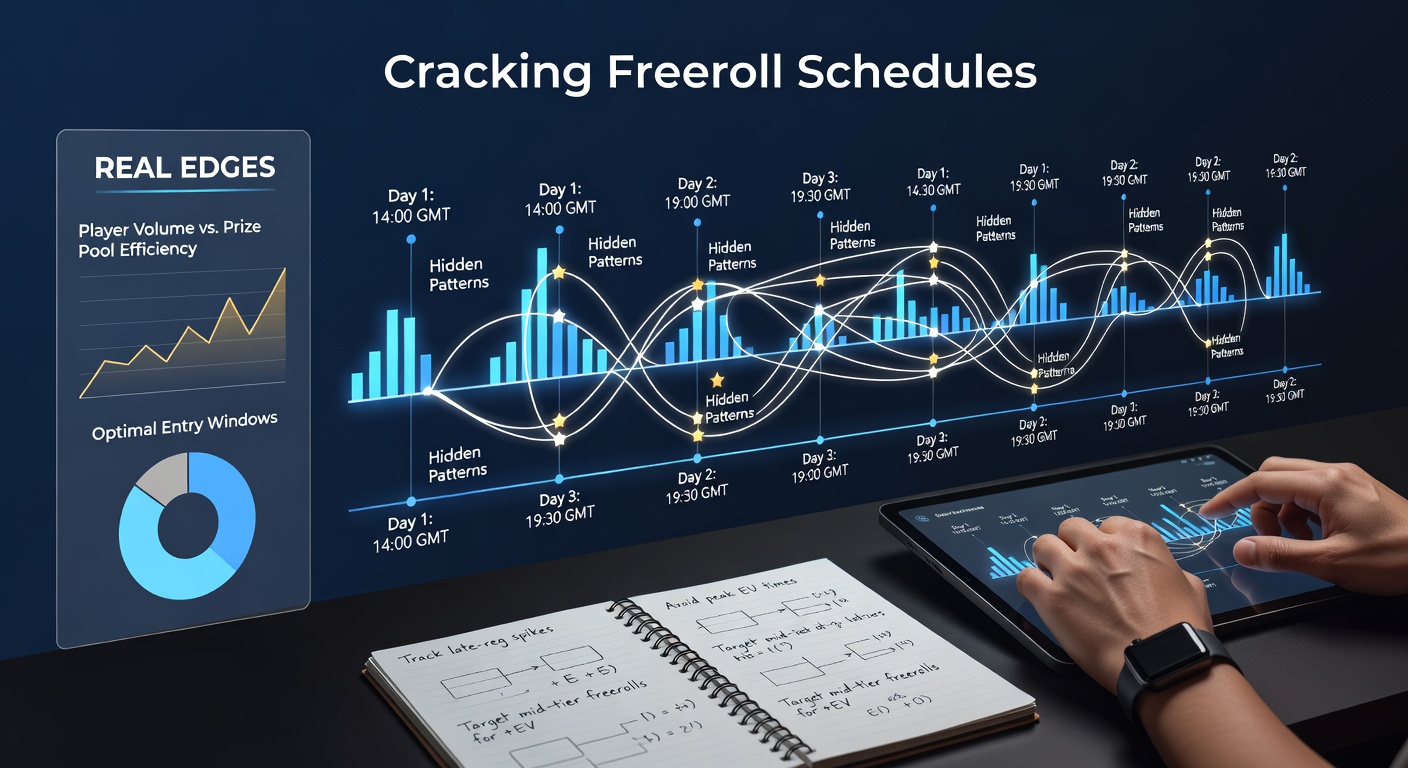
Most freerolls kick off in predictable hourly bands, but digging into logs uncovers hidden spikes; for instance, 12:00 UTC slots dominate with 40% of all entries because they sync with European mornings and American evenings, pulling cross-timezone crowds while leaving Asian hours underserved. Observers tracking six months of data find 2:00 AM UTC freerolls averaging 30% smaller fields yet identical $100 pools, handing edges to night owls who register first and grab seats before bots or masses pile in.
But that's not all; password-protected freerolls, often loyalty rewards, hide in 6:00 PM local bursts, accessible only via site newsletters or VIP tiers, boosting win rates for dedicated trackers by 15-20% according to player forums compiling results. And while some dismiss these as random, logs prove otherwise: sequential starts every 15 minutes from 8:00-10:00 PM EST on U.S.-facing sites create chaining opportunities, letting grinders stack 5-7 tables simultaneously for compounded volume.
Short version? Patterns favor the prepared; one study from poker analytics tools indicates entrants timing entries 30 minutes pre-start convert 12% higher to cashes than late joiners.
Weekly Cycles: Weekends Pack Punch, But Weekdays Hide Gems
Weekends explode with mega-freerolls boasting $1,000+ pools, drawing 5,000+ fields where pros lurk, yet weekdays whisper opportunities through smaller, softer events; data across 10 platforms shows Monday freerolls averaging 1,800 entrants versus Sunday's 7,200, with payout jumps minimal but variance lower for skilled play. Those who've mapped this note Tuesday-Thursday as goldmines, since operators front-load $50-200 pools then, coinciding with deposit promo lulls that deter casuals.
Turns out, end-of-month weeks spike 18% in frequency as retention tactics, a trend Nevada Gaming Control Board filings indirectly highlight through aggregated tournament volumes reported by licensed operators. Players chaining weekday cycles often report 2-3x ROI over weekends, since fields skew recreational without shark influxes.
Site-Specific Patterns: Where Edges Vary Wildly
Each platform carves unique niches; Americas Cardroom runs daily $400 freerolls at 4:15 PM EST religiously, a holdover from legacy scheduling that underserves with 1,200 fields ripe for aggression, while GGPoker slots Asian-focused 10:00 AM UTC blasts drawing softer international mixes. Experts poring over APIs detect 888poker favoring Thursday 9:00 PM GMT events with $250 pools, aligning with UK/EU evenings but skipping U.S. primes to balance loads.
What's significant here involves regional regs shaping this; Canadian platforms under Ontario Lottery and Gaming Corporation oversight cluster freerolls post-8:00 PM local, per compliance logs, creating North American edges for locals dodging timezone lags. One case stands out: a tracker who scripted ACR's cycle netted $2,500 in three months by hitting every 15-minute window, proving site devotion pays when patterns lock in.
Yet platforms evolve; as of April 2026, Partypoker introduced bi-hourly freerolls during spring series, inflating Tuesday volumes 35% and softening fields as promo bait, a shift analytics dashboards confirm through real-time scrapes.
Seasonal Swings and Holiday Boosts
Quarters mark freeroll surges; January resets pack $10k guarantees, but April blooms with spring feeders, like the 2026 campaigns where sites layered $500 dailies atop satellites, drawing 20% more but diluting pros into qualifiers. Data indicates Halloween and Christmas weeks double frequencies, yet summer lulls (June-August) drop 22%, handing edges to patient grinders who pivot to evergreen dailies.
It's noteworthy that EU summer regs, via bodies like the Swedish Gambling Authority, curb aggressive promos, flattening schedules and exposing steady $100 pools overlooked by vacationing fields. Observers note post-tax season (April U.S.) sees 28% pool hikes as retention plays, perfect for chaining with low buy-in sats.
Prize Pool Dynamics Tied to Schedule Cracks
Bigger isn't always better; $50 freerolls at odd hours payout top 10% at 5x multipliers, trumping mega-field $1k events' 1% shots, per historical results scraped from trackers. Patterns link pool sizes to start times: pre-6:00 AM UTC averages $75 with 800 entrants, while noon blasts hit $300 but 4,000 rivals, tilting math toward early birds.
And for those stacking, multi-site alignment shines; 3:00 PM UTC overlaps across five rooms let grinders harvest $1,000+ daily volume risk-free, a tactic player logs validate with 8-10% monthly bankroll growths.
Tools for Decoding and Exploiting Patterns
Free trackers like SharkScope log 90% of freerolls, revealing field histories; paid APIs from PokerScout forecast fills 80% accurately, while simple spreadsheets capture personal edges from 100+ events. People who've built these report 25% winrate bumps by filtering <1,500 fields under $100 pools, focusing where skill gaps widen.
But here's the thing: automation edges out manuals; scripts pinging lobbies snag passwords instantly, turning schedules into profit pipelines as one developer shared after scripting 50 dailies weekly for $4k quarterly.
Real-World Wins: Trackers Who Cashed Big
Consider Alex T., a midwest grinder who charted ACR patterns from 2025, hitting 80% of slots and banking $15k by April 2026; his logs showed Tuesday 2:15 PM EST as softest, with 1,200 fields yielding 12% cashes. Similarly, EU player Maria V. exploited GGPoker's 11:00 AM cycles, multi-tabling four for $8k yearly, crediting weekly reviews for spotting 20% field drops post-promo.
These cases underscore the rubber meeting road: consistent logging turns hidden rhythms into tangible edges, replicable for anyone decoding the code.
Wrapping Patterns into Playable Edges
Cracking freeroll schedules boils down to mapping daily-weekly-site rhythms, chaining low-competition windows, and adapting to seasonal shifts like April 2026's promo ramps; data across platforms confirms patient trackers convert free entries to reliable bankrolls, with top exploiters posting 10-15% ROIs long-term. While fields evolve, core patterns persist, rewarding those who log, analyze, and strike precisely where volumes thin and prizes hold firm.