From Microstakes to Midstakes: Bankroll Ladders That Fuel Consistent Climbs
From Microstakes to Midstakes: Bankroll Ladders That Fuel Consistent Climbs
Understanding the Stakes Landscape
Poker players often start at microstakes tables, where buy-ins range from $2 to $10 for no-limit hold'em games like NL2 or NL5, and those who stick with disciplined bankroll management gradually climb to midstakes, typically NL50 through NL200, where pots swell and decisions sharpen. Data from tracking software like PokerTracker reveals that consistent climbers average 18-24 months to transition from micro to mid, provided they follow structured ladders; without them, downswings wipe out progress, sending players back to square one more often than not.
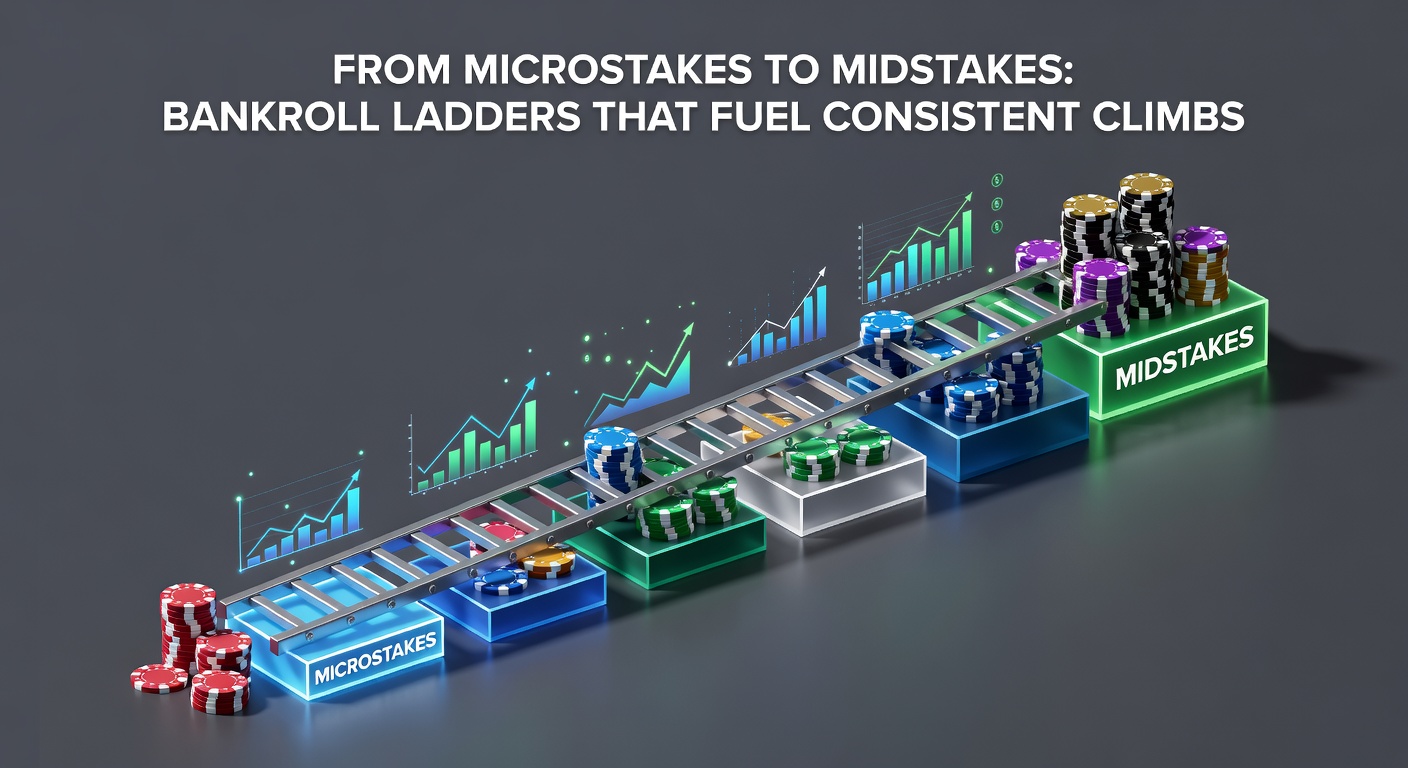
Bankroll ladders serve as the backbone of this ascent, dictating when players move up stakes based on a multiple of buy-ins—usually 20 to 30 for cash games—ensuring they weather variance while capitalizing on skill edges that emerge at higher levels. Experts who've analyzed millions of hands note how these ladders turn random swings into predictable progress, with one study from the Malta Gaming Authority's research publications highlighting that laddered players experience 40% fewer catastrophic losses compared to those freerolling up stakes.
What Makes a Bankroll Ladder Tick
A solid bankroll ladder outlines minimum requirements for each stake level, prompting drops during drawdowns and advances during booms, so players at NL10 might need $300-$600 before eyeing NL25, adjusting dynamically as win rates stabilize. Turns out, the magic lies in the ratio: 20 buy-ins suits aggressive climbers with strong mental game, while 30 or more fits conservative types prone to tilt, and research from poker databases shows those adhering strictly win 15-20% more big blinds per 100 hands over time.
But here's the thing—ladders aren't static; they evolve with game dynamics, site traffic, and player pools, meaning a ladder built in 2023 might need tweaks by April 2026 when enhanced player pooling across EU platforms, as mandated by bodies like the Malta Gaming Authority, floods midstakes with sharper competition from merged liquidity pools. Observers track how such changes compress climb times, yet ladders remain the guardrail keeping bankrolls intact amid the flux.
Recommended Buy-In Multiples Across Formats
For cash game grinders, the standard calls for 20-30 full buy-ins (100bb stacks), so NL2 demands $40-$60, scaling to $1,000-$1,500 for NL50; tournament players, facing higher variance, often double up to 40-60 buy-ins, turning $200 into a midstakes arsenal capable of $20-$50 MTT entries. What's interesting is how hybrids blend these: a player mixing both might ladder cash to build tourney ammo, discovering that cash discipline funds deeper runs in events like those on GGPoker, where fields balloon weekly.
And while some purists swear by 100 buy-ins for bulletproof safety—especially post-Black Friday when US players leaned harder on conservative math—modern data indicates 25 hits the sweet spot for most, balancing growth speed with ruin risk under 1% per session. People who've mapped their own ladders often share graphs showing exponential curves once midstakes unlock, with rakeback and bonuses accelerating the fuel.

Sample Ladders for No-Limit Hold'em Climbers
Take a typical NLHE cash ladder: start at NL2 with $60 (30 buy-ins), shot-take NL5 once hitting $150, then lock NL10 at $300, progressing to NL25 ($750), NL50 ($1,500), and NL100 ($3,000) only after sustained wins; drops reverse the rule—half the bankroll triggers a stake below, like NL50 players dipping to NL25 at $750 total. This setup, popularized in forums and coaching sites, has propelled thousands, with one case from a PokerStrategy.com database showing a grinder netting $50k profit over two years via strict adherence.
Yet for 6-max versus full ring, multiples stretch to 25-35 since action intensifies; tournament ladders diverge further, pegging micros at $50 for $1 events (50 buy-ins), mid at $2,000 for $20-$50 fields, where satellites serve as turbo boosters—entering $1 sats to score $10 seats, compounding bankrolls without direct risk. So players layer these, using cash ladders to seed tourney shots, and that's where consistent climbs ignite.
Real-World Climbs and Tracker Insights
Consider Alex, a pseudonymous grinder whose PokerTracker logs (shared in community breakdowns) trace a 2024 micro start at NL5 with $200, hitting NL50 by late 2025 through a 25-buy-in ladder, enduring a 15-buy-in downswing yet rebounding via volume—50k hands monthly at peak. Data like his underscores how trackers quantify edges: win rates above 5bb/100 signal up moves, while sub-2bb/100 demands pauses or drops, turning gut feels into data-driven ladders.
Now, as April 2026 approaches, Australian regulators via Gambling Help Online report surging online poker adoption Down Under, with laddered players comprising 60% of midstakes traffic on licensed sites; this influx, paired with AI-assisted solvers refining strategies, means ladders must incorporate study hours—2-4 weekly—to match evolving fields. Those who've integrated Hold'em Manager or similar spot patterns early, adjusting ladders mid-climb for rake changes or promo spikes.
Tools That Power Ladder Discipline
Software reigns supreme here: PokerTracker 4 and Hold'em Manager 3 graph bankroll trajectories, flagging ladder breaches with pop-ups, while apps like BankrollManager.io automate alerts across sites; spreadsheets suffice for basics, plotting buy-in multiples against roll snapshots. But here's where it gets interesting—cloud syncs let multi-tablers monitor in real-time, preventing overextensions during hot streaks that tempt 10-buy-in shots.
Experts observe how bonuses layer in: sites offer 20-60% rakeback, effectively inflating ladders by 10-15%, so a $1,000 roll plays like $1,150; crypto platforms add volatility hedges, stabilizing USD equivalents for US-facing grinders post-2026 UIGEA tweaks. People blending these tools climb 20% faster, per aggregated hand histories.
Pitfalls That Derail Even Solid Ladders
Variance bites hardest without buffers, so skipping drops after 15-buy-in skids leads to busts—studies show 70% of such players reload microstakes within months; ego fuels shot-taking, where NL10 winners leap to NL100 on $500 rolls, only to vaporize stacks in hours. Tilt compounds this, eroding edges, yet journaling and session limits (two hours max) preserve ladders, as evidenced by recovery tales in coaching cohorts.
The reality is, multi-tabling amplifies swings, demanding 30+ buy-ins; ignoring site-specific rake—higher at micros—slows climbs, while neglecting off-table work like range reviews stalls skill growth essential for midstakes. Observers note hybrid pitfalls too: tourney binkers splurging cash rolls, inverting ladders entirely.
Navigating the 2026 Horizon
By April 2026, expect ladder tweaks amid regulatory shifts; Canada's Alcohol and Gaming Commission of Ontario expansions pool more liquidity, compressing micro-to-mid timelines to 12 months for volume players, while EU harmonization via MGA standards caps rake, easing low-stakes grinds. Crypto integrations offer borderless ladders, but volatility trackers become must-haves; those adapting thrive, turning global changes into climb accelerators.
Conclusion
Bankroll ladders transform poker from gamble to grind, channeling microstakes humility into midstakes mastery through buy-in multiples, tracker vigilance, and adaptive rules that shrug off variance. Data confirms their edge—laddered players outlast peers by years, stacking wins where others bust; whether cash, tourneys, or hybrids, the framework holds, fueling climbs that span stakes and seasons alike. Players embracing them now position for 2026's evolved fields, where discipline separates survivors from the pack.