Interface Changes in Poker Apps Reshaping Entry Patterns for Global Tournaments

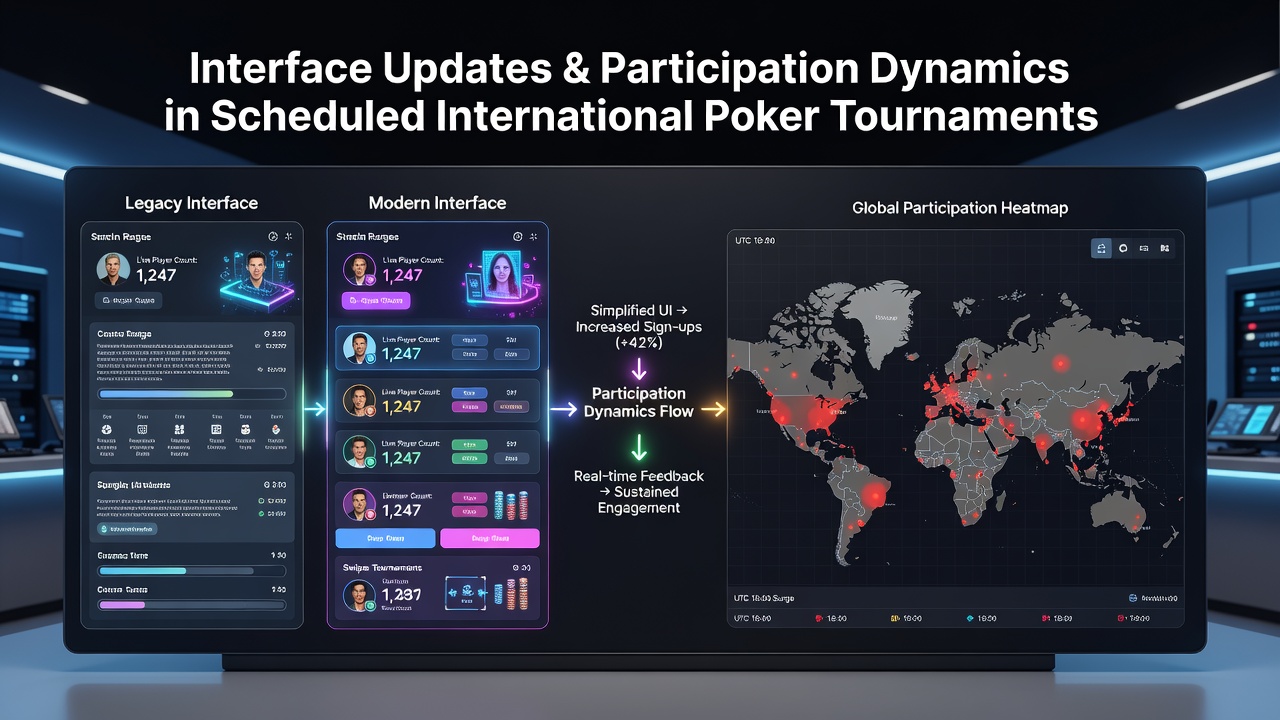
Interface refinements in poker applications have shifted how players interact with scheduled international events, altering registration timing, device preferences, and overall participation volumes. Data from major platforms indicate that updates focused on simplified navigation and instant deposit integration coincide with measurable increases in entry rates during peak periods such as the July 2026 tournament calendar.
Streamlined Lobby Designs and Registration Speed
Recent client updates introduced collapsible filters and one-tap registration buttons that reduced the average time from discovery to confirmed entry by several seconds according to internal platform metrics. Players who previously navigated multiple screens now complete sign-ups within the same view, which aligns with observed spikes in late-registration activity for events hosted across European and Asian time zones. Those monitoring participation logs note that mobile sessions lasting under two minutes now account for a larger share of total entries compared with desktop patterns recorded before the redesigns.
Real-Time Notifications and Deposit Integration
Push notification systems tied directly to funding methods allow users to receive alerts about seat availability while simultaneously accessing stored payment options without leaving the tournament screen. Industry reports compiled by the Nevada Gaming Control Board show that platforms deploying these combined features recorded higher same-day deposit volumes during the lead-up to major series. Observers tracking transaction data find that instant wallet connections correlate with reduced drop-off rates between notification clicks and completed entries, particularly among users located in regions with variable network connectivity.
Mobile Optimization Effects on International Schedules
Adaptive layouts that adjust button sizes and information density for smaller screens have expanded access for participants joining from outside traditional desktop environments. Research compiled by the Canadian Gaming Association indicates that tournaments with synchronized mobile and desktop lobbies experience broader geographic entry distribution during July windows when multiple overlapping series run simultaneously. Figures reveal that regions with high smartphone penetration show accelerated uptake once interface scaling improvements roll out, while desktop-only participation remains relatively stable.
Multi-currency display options embedded in the same view further support cross-border entries by presenting buy-ins in local denominations alongside converted amounts. This adjustment appears alongside documented rises in participation from markets where currency visibility previously required separate calculation steps.
Algorithmic Prioritization and Visibility Adjustments
Updated ranking algorithms within client lobbies now surface events based on user history and time-zone alignment rather than static lists. Platform telemetry shared in industry briefings from the European Gaming and Betting Association demonstrates that personalized ordering increases click-through rates for scheduled tournaments by directing attention toward events matching past participation patterns. Those analyzing entry timestamps observe that players encounter and register for overlapping international stops more frequently when relevance scoring replaces chronological defaults.
Security Layer Additions and User Trust Metrics
Enhanced verification flows integrated into the deposit path without lengthening overall completion time have coincided with sustained or elevated entry numbers even as regulatory scrutiny increases in several jurisdictions. Data aggregated by academic researchers at the University of Nevada, Las Vegas, suggest that transparent security indicators displayed during funding reduce hesitation among users who previously abandoned carts at the payment stage. Participation curves for recurring weekly events remain consistent when these layers operate seamlessly within the updated interface.
Conclusion
Interface modifications across poker applications continue to influence how participants locate, fund, and enter scheduled international events. Patterns documented through platform analytics and regulatory summaries point to faster registration paths, improved mobile compatibility, and contextual notifications as key factors reshaping entry dynamics. As July 2026 series unfold, ongoing refinements in client design will likely sustain these shifts in global tournament engagement.