Navigating Timing Misalignments Between Poker Application Updates and International Tournament Entry Surges
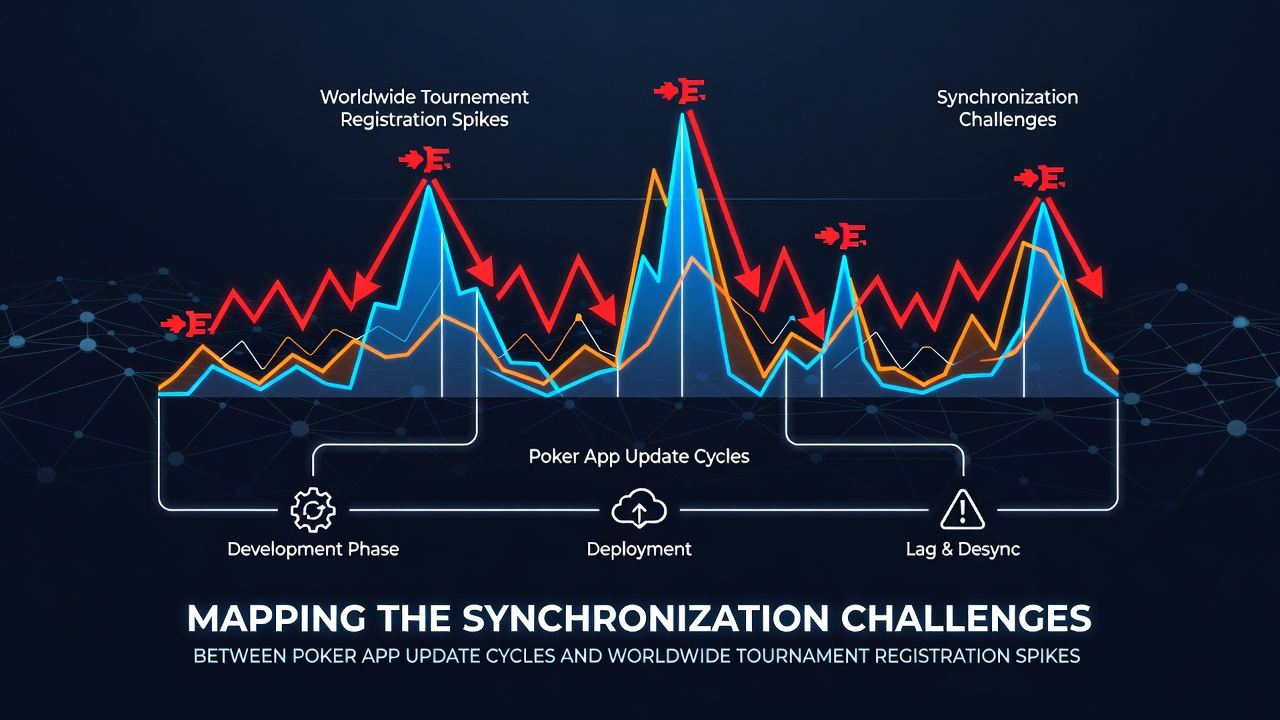
Developers release poker application updates on fixed cycles that often intersect with registration rushes for major events around the globe, and these intersections create measurable disruptions for players attempting to complete entries. Data from multiple regions shows that mobile clients undergo version pushes every four to six weeks on average, while tournament fields open weeks in advance and experience concentrated sign-up activity in the final seventy-two hours before start times. Observers note that when an update window overlaps with those final hours, servers experience elevated error rates and users encounter interrupted payment flows or frozen registration screens.
Update Cycles and Their Predictable Rhythms
Software teams follow release calendars that prioritize stability testing and regulatory compliance checks before deployment, which means patches arrive at consistent intervals regardless of external tournament calendars. Research indicates that major platforms coordinate with app stores in the United States, Europe, and Asia to schedule phased rollouts, yet these phases still leave brief periods when older versions lose compatibility with live tournament servers. Figures from industry monitoring services reveal that update-related downtime averages between ninety and one hundred eighty minutes per cycle, a window that directly overlaps with registration surges in time zones where events begin at evening hours.
Worldwide Tournament Spikes and Regional Patterns
Tournament calendars generate distinct peaks tied to series in North America, Europe, Australia, and emerging markets in Latin America and Southeast Asia, and each region contributes its own registration wave that operators track through entry-volume dashboards. In July 2026, multiple international circuits scheduled overlapping festival events that produced simultaneous entry deadlines across twelve time zones, creating compounded pressure on backend systems. Data shows that registration activity for these events climbed sharply between 18:00 and 23:00 local time in each host region, producing a rolling global surge that lasted nearly thirty-six consecutive hours.
Where Cycles Collide and What the Data Reveals
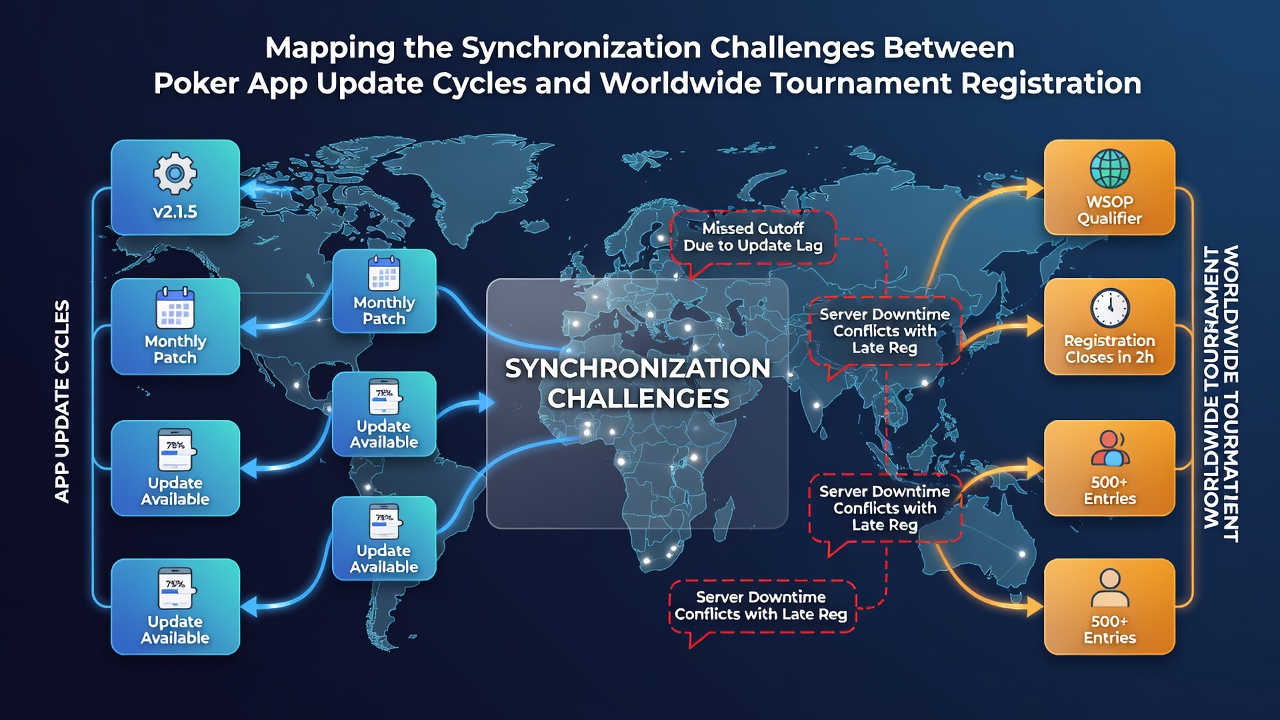
Analysts tracking server logs have documented repeated instances where update deployments coincided with these rolling surges, resulting in elevated abandonment rates at the payment confirmation stage. One study covering platforms serving Canadian and Australian users found that entry completion dropped by 14 percent during update windows that fell inside the final forty-eight hours before major events. The same dataset indicated that players attempting deposits through third-party processors encountered additional latency when the app client required a forced refresh mid-transaction.
Those who monitor traffic patterns across networks report that the mismatch stems from independent scheduling systems that lack shared visibility between development teams and tournament operations staff. Updates address security patches and feature additions required by regulators, while tournament calendars follow venue availability and player demand cycles that shift annually. Without synchronized planning, the two calendars continue to intersect at predictable but unmanaged intervals.
Regulatory and Infrastructure Factors Across Regions
Regulatory bodies in different jurisdictions impose distinct testing and approval requirements that further rigidify update timelines, and these requirements do not account for external tournament schedules. The Alcohol and Gaming Commission of Ontario, for example, mandates pre-deployment reviews for payment module changes that add days to release windows, while the Australian Gambling Research Centre has published reports on similar compliance layers affecting operators serving that market. These staggered approval processes mean that a single global client cannot receive simultaneous updates everywhere, leaving some regions running older builds during high-traffic periods.
Network infrastructure also plays a role because regional data centers experience variable load balancing during update distribution, and spikes in tournament traffic amplify any temporary imbalance. Observers tracking packet loss metrics note that regions with concentrated player bases, such as parts of Europe and East Asia, show the highest correlation between update timing and registration failures.
Observed Adjustments and Industry Responses
Some operators have introduced staggered rollout controls that allow selective pausing of updates when entry volumes exceed defined thresholds, and early implementations of these controls reduced error rates during subsequent festival periods. Other platforms now publish public maintenance calendars that list planned update windows alongside major tournament deadlines, giving players advance notice to complete registrations before potential disruption. Data collected after these adjustments shows modest improvements in completion rates, although full alignment remains limited by the independent nature of the two scheduling systems.
Conclusion
teh synchronization challenges between poker application update cycles and worldwide tournament registration spikes arise from separate operational calendars that operate without shared constraints or real-time coordination. Evidence from server metrics, regulatory filings, and regional usage reports demonstrates that overlaps produce measurable friction for players and operators alike. Continued monitoring of these intersections provides the clearest path toward identifying workable adjustments that respect both compliance requirements and event-driven demand patterns.